

When Writing As a Coping Mechanism Becomes Freedom, Then a Career
Indie Author Spotlight Feature: Special educator and author Christopher Pearce


✨📚Another Indie Author Spotlight feature is here!
Every week, One Brilliant Arc (OBA) and Wildest Dreams partner together to spread the word about a new indie author who is working on a story we think you should know about! We also learn about their lived stories and what they have learned through the journey of being an author.
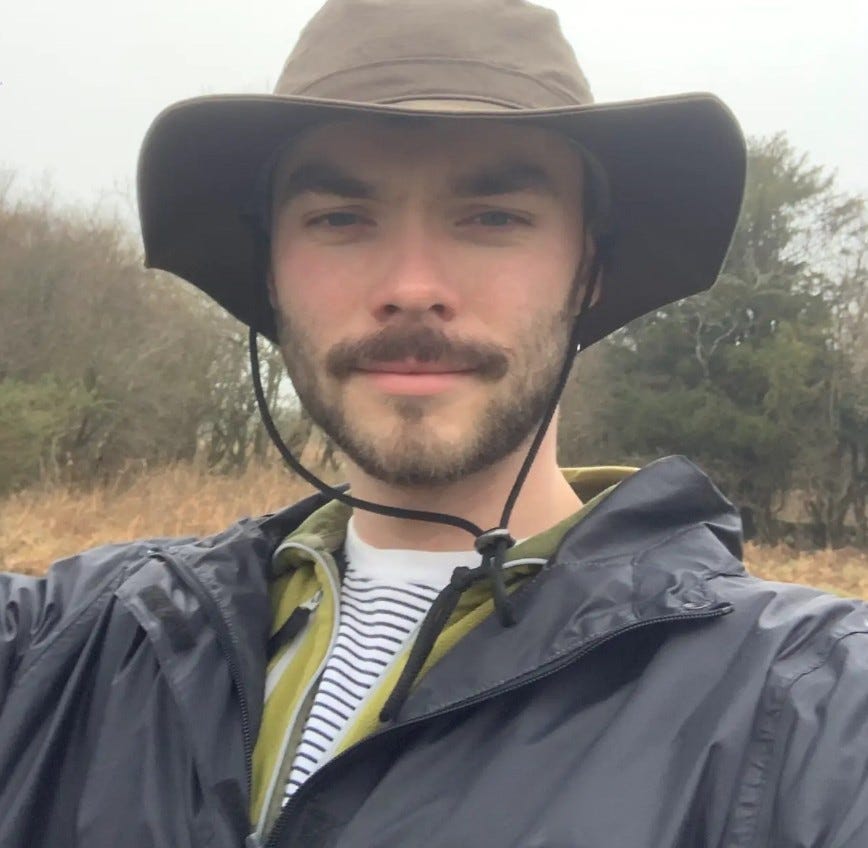
Meet Christopher D Pearce!
Better known as “Kip” to his friends, Christopher is a special educator by day and a fiction writer by night. His middle-grade novel, The Howler, is coming out in 2026, and his dark fantasy novellas, The Last Days of Armistice, are being published on his Substack.
As Christopher shares with us, his early passion for writing afforded him the freedom to express himself when growing up in a world that refused to accept him. This escape into stories we create in order to find freedom, safety, and acceptance is relatable to a lot of writers—maybe it’s even part of your experience. Now, Christopher writes his stories for his younger self who needed them and for others—both young and old—who need these stories as their own inspiration and hope. What a great example of a powerful WHY behind his writing!
Perseverance through rejection is one of the hardest parts about being an author. Christopher knows exactly what kind of fortitude this journey takes, AND why it is worth the struggle. We want to congratulate him on his soon-to-be-released novella, and encourage you to show him some love to brighten his day as he continues the good work of writing stories that help readers of all ages! Click that ❤️, share this post with other story lovers, and follow along Christopher’s writing journey on his Substack publication: The Three Thrones Saga.
Without further ado, let’s hear from Christopher about his story and what he has learned through writing it!
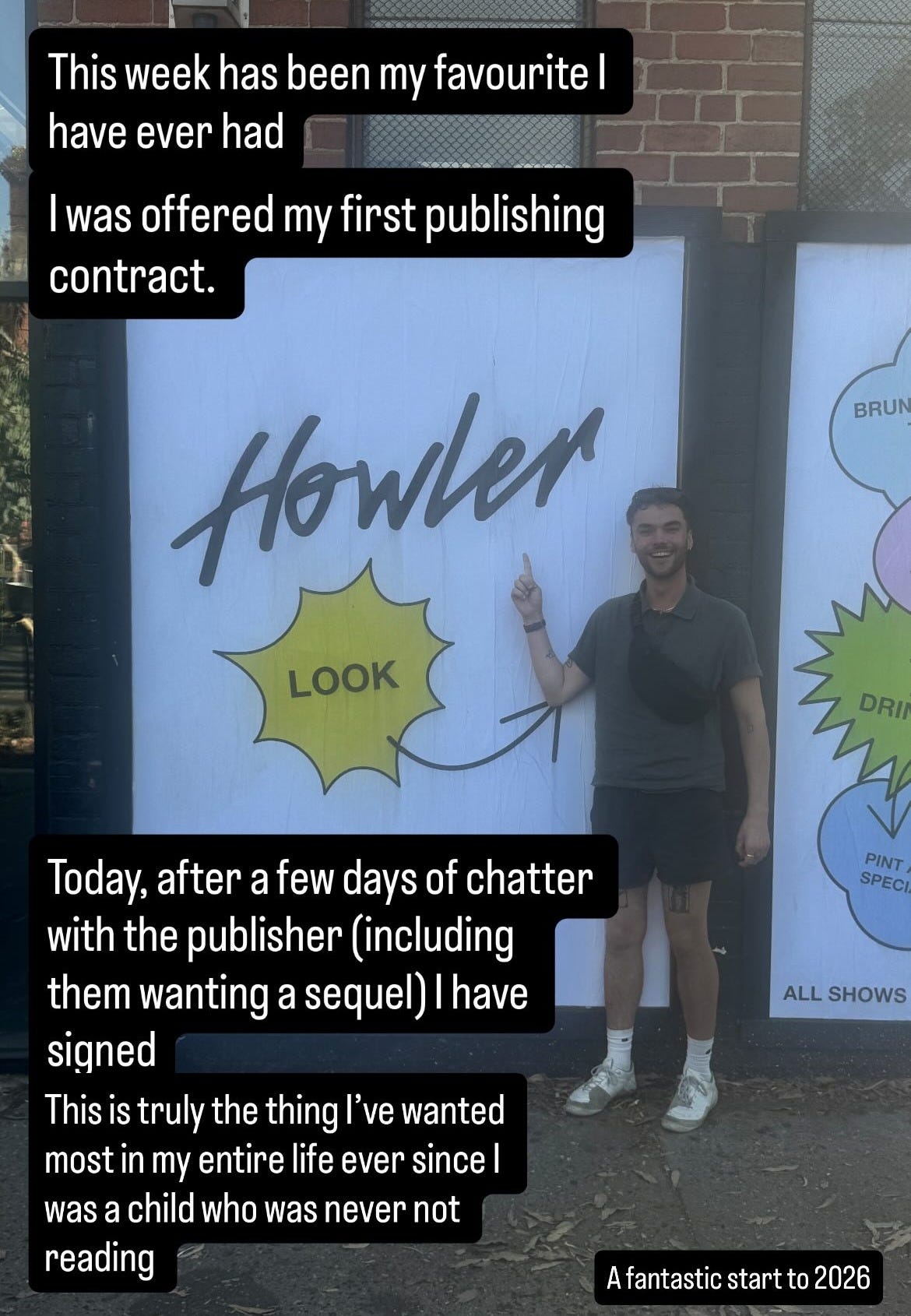
Tell us about yourself and what kind of creative work you do!
I'm an aspiring author originally from the UK, now living in Melbourne, Australia. By day, I am an educator for children with additional needs, and have been writing stories since I was capable of holding a pencil. Mostly, my work is in prose form, specifically speculative fiction. As a gay man growing up in a rural area, I found that the speculative genres afforded me an escapism, and writing within those boundaries reduced any constraints of expression.
Describe yourself in three words.
Excitable, passionate, and driven.
How has writing stories impacted your real life story?
I feel that my writing has been a significant outlet for me for my entire life. As I say, I have been writing for as long as I can remember. When I was in primary school I would often rip the last few pages out of exercise books and take them home to write stories, later graduating to the family computer. I feel it's my love of literature that affords me multiple things about my personality: my vocabulary, my humour, my wanderlust.
What story are you currently writing?
I imagine this answer will be similar for a lot of creatives, but at the moment I have quite a few on the go. The biggest challenge there is to prioritise which one I want to focus on. That being said, one of my focuses right now is the sequel to my soon-to-be-released middle-grade novel, The Howler. The Howler, which I originally intended to be a stand alone novel, follows a group of children living on Dartmoor in Devon during the Victorian Era. We follow Henry Hughes, the son of a zoologist who has been brought in to investigate legends of a monster terrorising the village. Soon enough, Henry encounters two local children, Thomas and Nell, who are the grandchildren of the reviled Weather Weaver, a local sorcerer, by all accounts. As the three develop a friendship, they fall deeper into a mystery and unravel the secrets of witches, and the land itself. In the sequel, I intend to pick up the story around a year later, where justice for the actions that lead to the events in The Howler must be dispensed, even as something much darker and crueller prowls Victorian London.
Beyond The Howler and its sequel, my other focus is my series of Dark Fantasy novellas, The Last Days of Armistice. This is a series which follows the character of Tris Morinder, a boy who's recently lost his home and family to the rise of religious zealotry. These novellas follow him through his adolescence and introduce readers to the world of The Three Thrones Saga, the title of the wider myth-cycle. The first is finished and available on my Substack, and I'm currently working on the 2nd installment where there is a dramatic shift in tone as Tris is introduced to the dark politics which surround magic on the continent of Palanost.
What makes this story matter to you?
With regards to The Howler and its sequel, I feel that what makes it really matter to me is first of all the setting. I grew up in north Devon, England, and was fascinated from a young age with the ancient folklore and mythology of the countryside. The village I grew up in didn't burn effigies of Guy Fawkes on November 5th, we turned a boulder in the square because the legend was that it kept the Devil in Hell. The stories of Devon are so vast and fascinating that I could prattle on about them for hours (and now that I live in Australia where most people have never heard of Devon, let alone Shebbear, I often do). Besides my deep connection to the rolling hills and fens and forest of Dartmoor, I think it is the struggle of the characters of Nell, Thomas, and Henry that matter to me the most. When I set out to write The Howler, I wanted the dread and tension not to come from running from a scary monster, but the dubious relationships the children have with their parental figures.
As a lonely child with a difficult upbringing, I think a story like that would have made me feel very seen.
The Last Days of Armistice matters to me as the fantasy world of the Three Thrones Saga is one I began creating when I was a teenager. In the last 15 years it has turned into something much richer and deeper than some crudely drawn maps and hastily scribbled ideas on paper I took out of the family printer. I wrote these silly fantasy stories as they kept me entertained, and as the years have gone by I have realised that they mean a great deal to me.
To begin, I suppose they were coping mechanisms, these stories I would write. Now, they are vast, rich worlds of which I am immensely proud.
Why this story? Why now?
As an educator, I found I was so often having the same conversations with children during our reading interventions. They did not feel that they were being challenged by the books they were reading. They were finding the stories predictable and safe. When I asked what they would watch on television, to see if I could get a bit of an idea of genre books I could request for them, I found a number of the kids replies saying things along the lines of:
"Me and my mum/dad/sibling watch horror films."
Now, naturally, these are kids around 10-11 years old, so that sat poorly with me initially, on a professional level. Then, I started to think about the books I read when I was their age, how I would stay up all night reading by the light of the little battery-powered torch my nan and grandad got me so that I could read in the car. Those were all scary books (I had heaps of nightmares) and truly shaped my love of literature which I feel defines my taste and writing style today. I want children to be engaged with reading, to feel seen, challenged, and not at all spoken down to.
Why The Last Days of Armistice now? Because I owe it to myself. That kid who loved medieval fiction and watched The Lord of the Rings countless times with my sister and stayed up writing stories about knights and goblins and witches deserves to have his stories told. Sure, I've changed them a lot, and the themes are sadly reflective more on real world terrors of the modern day than just the fun short stories he wrote, but they're still his.
Who do you hope to reach with this story?
As I say, my main goal was to engage younger readers and keep that drive and passion for great stories alive for the younger generation. If a kidi reads The Howler, and sees themselves a little bit in the role of Nell, Thomas, or Henry, perhaps they will feel a bit less scared and alone. Perhaps they'll be inspired to start tricking their teachers into giving them exercise books so they can write stories in.
That being said, I am a firm believer that any and all books are for everyone. The Young Adult label isn't a recommended reading age, in my eyes, but an indication of thematic content and accessibility. I could recommend countless picture books which I think various adults would enjoy, if you're keen to just relax into a story and not worry what others might think because you want a simple low-stakes story with some nice illustrations in it. That's a very long way of me saying that I think The Howler, particularly, will be a fun and exciting read for anyone who loves a gothic fantasy with some morally grey characters.
What do you hope readers feel or remember when they encounter this story?
I think any great story needs, first of all, a memorable setting. That is certainly something I feel I achieved with The Howler, having grown up not a stone's throw from Dartmoor. I feel that readers with a vivid imagination will know exactly what the country is like, how beautiful and wild and vast it is, and not to mention haunting. I want readers to feel excited, tense, mournful and hopeful all at once. But most of all, I want people to be entertained. That's why we read stories, ultimately.
What has been the most challenging part of your author’s journey?
Rejections. Regardless of how thick your skin is, regardless of how much of it you think you can handle, there is going to be a point when you've heard enough "no's" or simply heard nothing at all where it just starts to weigh on you. I had a few teary moments where I really started to believe my stories weren't good enough and that they should just stay saved on my computer and never see the light of day. When I wanted to vent about this to a friend, he said:
"May as well give up then."
Naturally, he was joking. But even just that spurred me back into action. Why should I give up? I treated submissions like a full time job, tailoring every pitch for each individual house and sure enough, I came across a small press who loved The Howler and that story has found its home.
Where can people find you and support your work right now?
The best place to read my work (at least until The Howler is in print) is my Substack, The Three Thrones Saga. I publish episodic chapters around once a week (sometimes fortnightly) broken up with world building essays, smaller parts of lore, and, of course because every good fantasy story needs them, maps. Fans of dark fantasy, epic journeys, and rich vibrant worlds would love a gander, I hope.
Once The Howler is released in 2026, you'll be able to find it at any good online retailer. All your classics: Amazon, Barnes & Noble, Kobo, Everand, Google Store. Then, within a few months, an audiobook will be released, if that's more your speed.
Do you have any other projects on the horizon you want to tease for our readers?
Well, I've already mentioned The Howler's sequel, so keep your eyes peeled for that one, definitely. The Last Days of Armistice will continue to be released through Substack, for the time being, so there's plenty to sate yourself with there. After that series of novellas is complete, it's followed by four novellas currently titled The Isles of Foxes, and then another 11 novels/ novellas. Four of these are already complete, but there's a lot of editing that still needs to happen, as one might expect from a fantasy series.
Barring those projects, I have another speculative in the works. A story set in an isolated coastal Devon village, a widower sees a chance to right his wrongs and lessen the burdens of his regrets when something washes ashore that starts to change the land and, seemingly, turn back the clock, though not for the better. For now, this story is called The Blessing.
What stories do you want to see more of in the world?
Okay, this may be controversial, but I want pulp. I don't feel that every story I read needs to be some huge complex thing that's going to change my life and make intelligent observations on philosophy or social commentary (though naturally I love these as well and find them very important). Sometimes, I just want a good story. I want something sensational, that's going to transport me to the world it's describing. I want vivid characters and classic stories being retold again. I want to have fun when I read a story. I want a detective in a smokey jazz lounge during prohibition, I want a brave knight trying to stop a horde of goblins in service to a tyrant king, I want a space captain and their whimsical sidekick having adventures on alien moons. I want escapism.
Thank you so much for taking the time to share your insights, Christopher! We are so proud you for never giving up in the good work you are doing, excited for your stories yet to come, and grateful for the chance to spread the word about your writing!
Got any questions for Christopher? Anything about his story resonate with your own? Drop a comment and let us know! 💬
Are you an indie author working on a meaningful story? We want to spotlight you!
Are you a writer with a story in the works that you are desperately trying to finish? The story team at One Brilliant Arc is here to help you! We offer ✨FREE✨ editing sessions with the OBA story team! Sit down with a panel of professional editors and get feedback on your work in progress!
Subscribe to Jessica Ann and see the magic she creates over at Wildest Dreams:
Our purpose is to have meaningful conversations, amplify authentic voices telling important stories, and support creatives doing good work. We can’t accomplish this mission alone!
This is an inspiring success story. Congratulations 👏🏾🎉