

How to Break Free from the Revision Cycle
When you can't tell if your 17th draft is better than your first or not


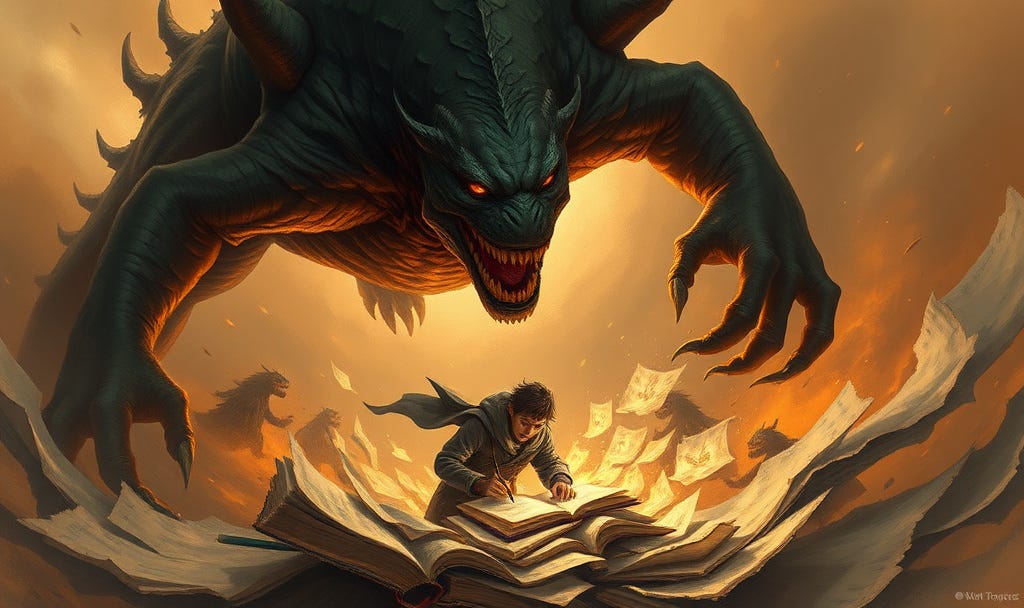
Remember in Groundhog Day when Bill Murray’s character, trapped in an endless loop, begins to realize that simply changing his surface-level actions—what he says, where he walks, how he orders his coffee—is not enough to break the cycle? He can rearrange the furniture of his day a thousand different ways, but until he undergoes a profound internal shift, the clock will always reset to 6:00 AM.
Have you ever felt that same sense of exhausting repetition with your own manuscript or screenplay?
You have rewritten the opening chapter twelve times. You have swapped the protagonist’s hobby, changed the setting from a rainy city to a dusty desert, and polished every sentence until the prose gleams with a professional shine. Yet, despite the technical perfection of your craft, something feels hollow. The story isn’t moving. It’s not hitting harder; it’s just getting neater. You can’t tell if each draft is making the story better, or only different.
This is the dreaded Revision Trap, and for marginalized writers who are already fighting an uphill battle against industry gatekeepers, this cycle is worse than frustrating. This trap is a form of creative burnout that can silence a necessary voice forever.
The story coaches at One Brilliant Arc have experienced this trap ourselves, and now we walk other marginalized storytellers out of this trap. We have realized that the solution isn’t more writing advice. What you really need is your own profound internal shift.

Why Writing Craft Can’t Fix Your Story
Most writing workshops and books focus heavily on craft. Countless resources teach you about dialogue tags, pacing, sensory details, and the “show, don’t tell” rule. These are essential tools—they are the paint and the brushes, but they are not the architecture. When we talk about narrative strategy, we are talking about the WHY behind the HOW.
Craft tells you how to write a beautiful scene. Narrative strategy tells you why that scene exists and how it connects to the protagonist’s soul-work.
When we are stuck in a revision cycle, often it is because we are trying to fix a structural problem with a craft solution. It’s like trying to repair a cracked foundation by repainting the living room. You might like the new color, but the house is still leaning. For marginalized storytellers whose narratives are often more complex and dangerous than the industry norm, the pressure to make a story “palatable” or “marketable” often leads us to bury the very structural truth that makes the story vital.
We stop listening to the story’s heartbeat and start listening to the ghost of a gatekeeper.
Finding the Heartbeat of Your Story
The core of the One Brilliant Arc Method is a simple but revolutionary insight:
The Character Lie is the load-bearing wall of every great story.
Every protagonist—and every writer—carries a misbelief. A twist of the truth they tell themselves to survive a world that wasn’t built for them. This “Character Lie” is the structural root of your story. If you haven’t identified this lie, your plot will feel like a sequence of events rather than a transformative story arc.
The journey of writing a masterful story requires us to identify and overcome the lies we have internalized as the author. The lies told to us by the gatekeepers who want us to stay silent. The lies we believe that keep us small, limited to a role someone else designed for us.
The story coaches at One Brilliant Arc are more than just editors. When you come to us with a story that needs work, we aren’t looking for typos. We are looking for the true heartbeat of your story and how to make your protagonist’s arc more powerful. Is your protagonist’s internal struggle actually driving their external choices? Or are they just a passenger in a plot you’ve forced upon them?
When you identify the Character Lie, your entire manuscript unlocks. You stop guessing what should happen next because your character’s path starts aligning with your own heartbeat. When you identify the lie that is holding you back, you break free from the Revision Trap and start creating from your true power. This is where story coaching becomes an act of liberation.
Narrative Strategy as Liberation
For the writers we serve—Black, Brown, Asian, and women writers; queer writers; neurodivergent writers; disabled or chronically ill writers, and those from working-class backgrounds—the industry has often demanded that we make our stories “safer” or “smaller.” We are told our themes are too niche or our structures are too unconventional. But we believe that the answer to revolutionizing a gatekept industry is not seeking permission.
The answer is to create work so structurally sound and insanely gripping that our voices become undeniable.
Narrative strategy is our tool for taking back authorship. It allows us to build stories that defy the standard, “safe” molds of the publishing world while maintaining a narrative power that rips apart the reader’s expectations. Whether you are part of our Tell It Anyway fiction cohort or working individually with our editors and story coaches, the goal is always the same: to move your work from the “safe” pile to the “essential” pile.
PSST! Until August 17th, you can get 50% off our fall fiction writer’s cohort program, “Tell It Anyway”! Complete your manuscript, get every tool you need to build your successful author business, and overcome the lies that hold you back in your own hero’s journey—all in just 8 weeks.
Unlock this Early Bird Discount with the coupon code “LIE50”
3 Steps to Un-Stick Your Manuscript
If you are currently haunted by a draft that feels “stuck,” rest assured: you don’t need a complete overhaul. You don’t need to keep going in circles until your 17th or even 27th revision round. What you really need is clarity on your story’s arc.
Use these three questions to find the root of the resistance:
What is the Load-Bearing Lie? Can you state, in one sentence, the false belief your protagonist holds about themselves or the world? If you can’t find it, your story has no emotional foundation.
Is the Conflict External or Internal? Most writers fixate on external obstacles. But true narrative strategy ensures that every external hurdle forces the protagonist to confront their internal lie. If the external plot could happen to anyone, it’s not YOUR story yet.
Have You Connected Your Story’s Plot to Your Protagonist’s Arc to Illustrate Your Theme? Every element of your story should exist to illustrate your theme. The lie your character believes becomes the essence of their arc. The truth that combats the lie becomes your story’s theme. Story structure is the historically proven
Are You Protecting the Character or the Reader? Often, we “protect” our marginalized characters from too much pain, or we “protect” the reader from too much truth. This makes the story safe, but it also makes it forgettable. Where are you pulling your punches?
From Confusion to Completion
Story is the tool. Liberation is the goal. Breaking your revision cycle isn’t about working harder; it’s about working deeper. It’s about moving past the surface-level craft and into the narrative strategy that honors your truth.
You have been working on this manuscript for years. You know something is not working, but you can’t quite see the core issue. We invite you to step away from the lonely cycle of revision and join a passionate storytelling community that sees your vision, understands the high stakes of your work, and can help amplify your authentic voice.
Our 30-minute free consults with one of our story partners is a great place to start! We will help you find the heartbeat of your story and diagnose what is keeping you stuck.
Unlock the true power of your truth.
Learn how to tell a story that can heal hearts and change the world.
Get real structural feedback from developmental editors who value your authentic voice. Not just another opinion, not someone else telling your story their way, but clear direction that confirms your creative intuition of where your story wants to go.
Don’t let your story become a ghost of what it was meant to be. Identify the lie, find the arc, and tell it anyway. The world is waiting for the version of your story that is dangerous, true, and undeniably yours.
💬 What do you think? Comment below:
What stage of writing has kept you stuck in the past?
How many drafts do you usually take to start feeling like your story is “working”?