


“From Hell’s Heart I Stab at Thee.”
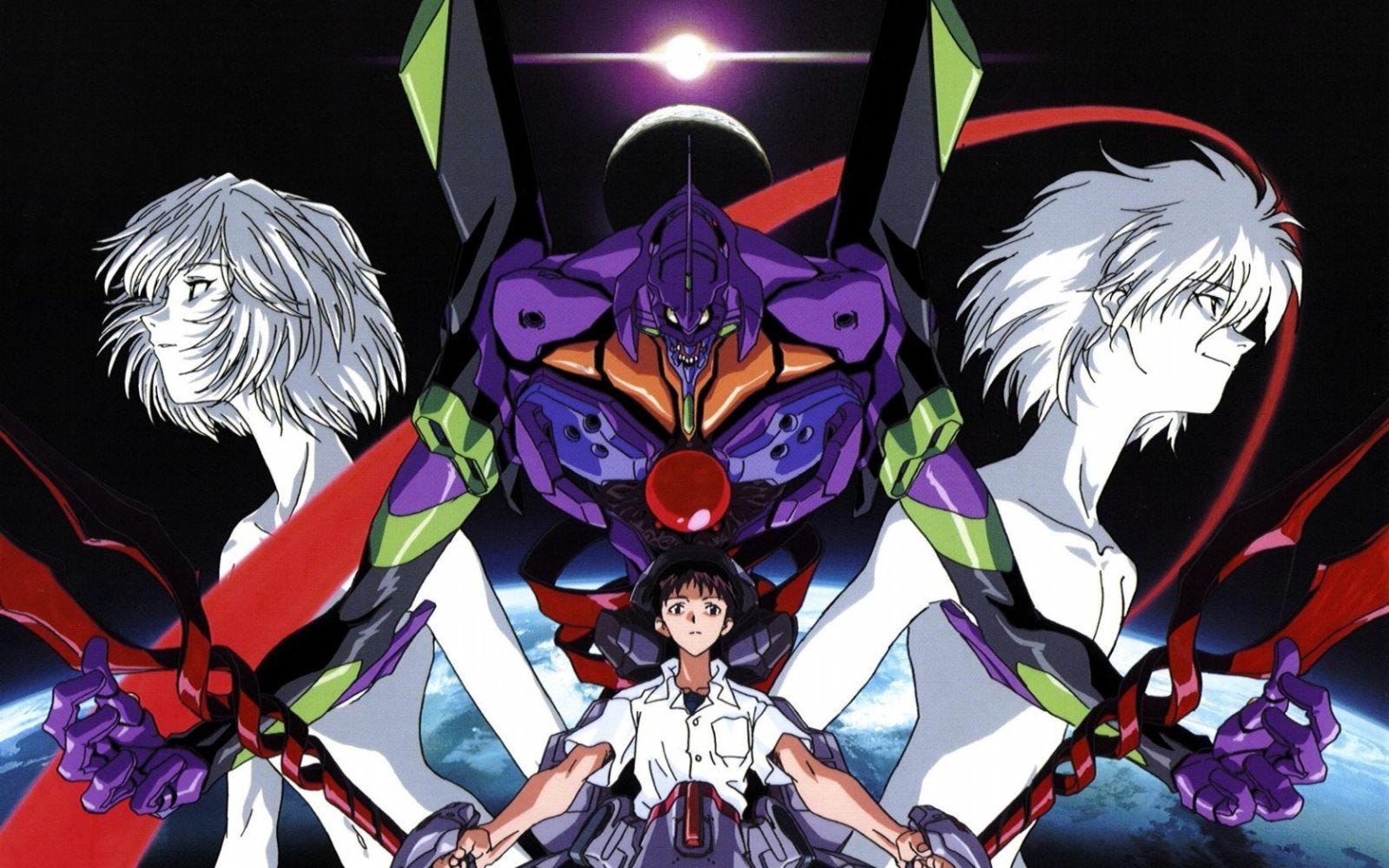
I absolutely cannot stand the anime series / franchise, Neon Genesis Evangelion, and to illustrate my utter disdain for this piece, I present an original meme of mine I had to make as a matter of personal coping.
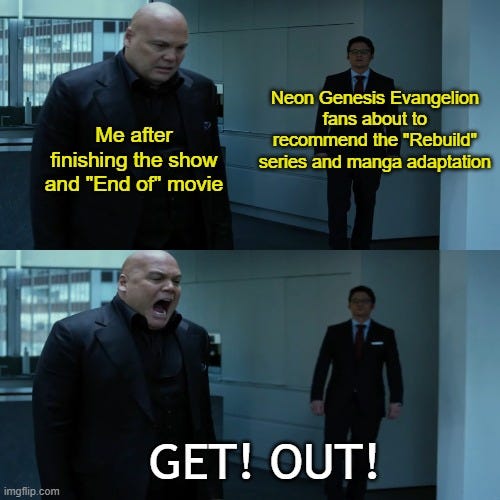
‘Nuff said.
However, throughout the excruciating pain that was my experience going back to finish this unbearable series, I noted that the anime was not without merit. Without inflating the galaxy-sized ego of this unapologetically cynical story trying too hard to be healingly sentimental, I admit the character designs were great. Much of the show’s world was designed distinctly, and there were many stand-out moments of animation goodness: raw and energetic. Without diminishing an ounce of my hatred for this work, I can honestly say that I understand what the show’s creator, Hidekai Anno, was trying to do, and that such an artistic pursuit was not entirely nonsense in concept. Even the failure of execution was not a total disaster. There was even one moment in the original ending, (Lord, I despise this anime), that lingered with me, dare I say, positively.
If for nothing else, there are scenes, images, and sounds of genuine horror that have stayed in my imagination. Like this one, near the end of the show:
Let Me Set the Scene:
One of the most truly, truly unendurable characters I have ever had the misfortune to suffer, the teenage Asuka Soryu, is piloting her giant fighting mech, the EVA Unit 2. Already a bit mentally unstable by this point in the episode, she begins her defense of the city of Tokyo-3 by facing off against the 15th Angel: the latest member of a mysterious species of giant monsters, each having bizarre and unique powers. Asuka aims her colossal rifle at the sky, right into space, searching for the orbiting Angel. Suddenly, her EVA is covered by an unsightly shade of yellow light, straight from her foe, which pierces right into her mech’s cockpit and into her mind. Immediately, the show’s musical score plays George Friedrich Händel’s famous 1741 oratorio chorus, Messiah. (You know the piece, the one that goes, “HAAAA-LLE-LU-JAH!”).
Because this kind of high school-grade pretentiousness is what Neon Genesis Evangelion loves to indulge in. Lord, I despise this anime. Indeed, as the music played, I immediately disliked the obnoxious score selection and still do.
Asuka begins screaming, (which, despite this context, is like saying the birds fly), to high heaven, begging the Angel to get out of her mind, to not look at her, to give her a shred of privacy. Her command team beneath Tokyo-3 is dealing with yet another computer systems crisis by the Angel’s assault. They are panicking, trying to get their programs back online and trying to save Asuka, who is in so much pain from the Angel’s mental attack. She keeps pleading for the Angel to stop, to let her mind be her own. But the thing, with cold indifference, does not stop.
By this point in returning to, restarting, and completing the series, I had long quit on the idea I was going to make peace with this nonsense. Thus, while I was paying attention to the show, I no longer had any heart invested into the tale. So, Asuka’s screaming, the engineering crew’s cries, and the general sense of panic meant little to me. Then, I noticed something strange…and intriguing.
Messiah had not stopped playing during the whole scene.
We all know the chorus of Händel’s as a gag solely containing a choir proclaiming the first few declarations of “Hallelujah”, but there is, in fact, at least four minutes more of music which I, personally, always found a little too much on the senses. Throughout all the chaos of this scene, that bloody music just keeps going, and going, and going, and going, pounding the audience with those unsettlingly joyous proclamations of Hallelujah. You have to focus on the dialogue to hear what anyone is saying, what is going on, because the damn music just keeps blaring. Suddenly, even I felt uncomfortable and, like Asuka, just wanted the music, and the unrelenting intrusion it represented, to stop.
Then, a thought drifted into my mind. “Man, I have never seen a piece of classical music used in this way, to create such a sense of claustrophobic horror, and be so effective that my skin is crawling a bit. I am gonna have to remember this scene for my own horror ideas; see what I can be inspired to create.”
“Reject Humanity, Return to Monke.”
Now, sincerely, I did NOT just unleash a portion of my scathing judgement on Neon Genesis Evangelion for you to read in order to spread negativity. I wanted to completely establish how much I am against this anime—that I am the very antithesis of a die-hard fan—so that the power of my point could be understood. Because, if I could be inspired creatively by a small scene from a work I am entirely against, just imagine the possibilities for genuine magic this opens up.
We all have stories and works of art we do not like for one reason or another. Pieces that, in our minds, do not live up to their promise; are obnoxious; are just plain bad. Often, we are encouraged to make broad strokes of opinion on the art we dislike. Told that to even give the slightest credit to them is to negate our opinions and, so, our credibility as skillful critics. Fair critiques and appreciation of art are good. But I am writing to remind you that we should look for inspiration everywhere. For you can certainly find fuel for your imagination even in the works that you, at best, do not care for, and at worst, utterly hate.
Just because a work does not succeed for you personally as a whole does not mean that every aspect is a complete and total failure. An unfunny comedy can have a great joke. A dull action movie could have a great setting. A tedious romantic song could have a killer melody or great pair of lyrics. Why do we let ourselves be limited by binary opinions imposed on us when we could instead find deeper, more interesting conversations around media? Because stories are, after all, a powerful force in the world even if they are imperfect. When you finish a story, a song, or step away from a piece of Art you don’t fully appreciate, you don’t have to deny there are elements that you could write home about.
For me personally, I have seen many a new film this year that I did not like. But, since I have been keeping a heart out to find goodness in the art rather than flaws to tear a piece down, I found moments of creativity that I let spark my imagination. The aforementioned second ending of Evangelion, the film dubbed The End of Evangelion, features bonkers and frightening imagery that did nothing for me but proved sometimes you gotta, and indeed can, swing for the fences in weirdness to make a work, at the very least, memorable. Thanks to one of the most uncharming villains I have seen in a good long while, Thunderbolts* proved to be a disappointment, but man, was that climax filled with action-packed executions that lit up my daydreams. Wolf Man (2025) may have utterly failed its promises from the first act, but oh, were those first 20 minutes the perfect Rosetta Stone for a new and brilliant adaptation of this Universal Classic Monster. Perhaps I expected too much from 2008’s lackluster High School Musical 3, (a recounting for another time), but, in trying out this film for the first time, I was reminded, by the shockingly strong performance by Zac Effron as the protagonist Troy Bolton, that the Archie Andrews archetype (of Archie comics) can still really work.
“Trash Taste”
They call tales like these “guilty pleasures”, but that title misses the fact that there is inherent positivity to find in such an art. Practicing looking for the good, original, inspiring takeaways in disliked art can lead to so many new pathways, solutions, and concepts in the imagination. You do not have to accept everything, but if something clicks in your brain, do not deny the wonder, and thus any ideas that come your way just because you and a piece do not see eye to eye. Greatness can even hide in the most mundane, unremarkable, and lousy things. The B-movies, the trashy songs, the fan service manga, and even the adaptations that insult us are capable of good ideas, artistic achievements, and things we can take with us as we continue our creative work.
If these words or our mission at One Brilliant Arc resonates with you, please consider buying our team a coffee so we can continue helping creatives tell stories that can save the world!
We cannot learn everything from masterpieces. Sometimes we need to see a work fail in our eyes to most effectively pinpoint what we were looking for. A film or TV show may suck but have a killer costume design. A book may have one powerful line amongst all its ludicrous words. Embracing this kind of “garbage” can help us create our own stories; plus-up our plotlines; invent whole new characters; or find a thematic hook we could not have found alone.
I hate even writing about Evangelion, for many reasons both great and small. Yet watching this despicable anime has not only inspired writing this article to share with you all a helpful discovery, but also has returned ideas for great horror tales back into my imagination when nothing else was quite doing that for me. Ultimately, you do not have to—nor should you—like everything, but do not reject a good idea when you find one, even if it’s in a metaphorical dumpster. Because you never know what treasures you may find hiding in dumpsters.
Need help rescuing your story from the dumpster and building it into a masterpiece that heals and inspires others? OBA’s story team is here for you! We offer professional editing services and, for a limited time, we are offering free story audits on your first 10-15 pages!
➡️ Submit your work in progress for a FREE editing session with our panel of story coaches.
💬 Comment below:
What “guilty pleasure” stories light up your imagination despite being “bad”?
Do you think there are redeeming qualities to be found in every story?
Recycled trash is one of the best things ever!